
Delivered work · ALLFED
Wargaming the collapse of a food system.
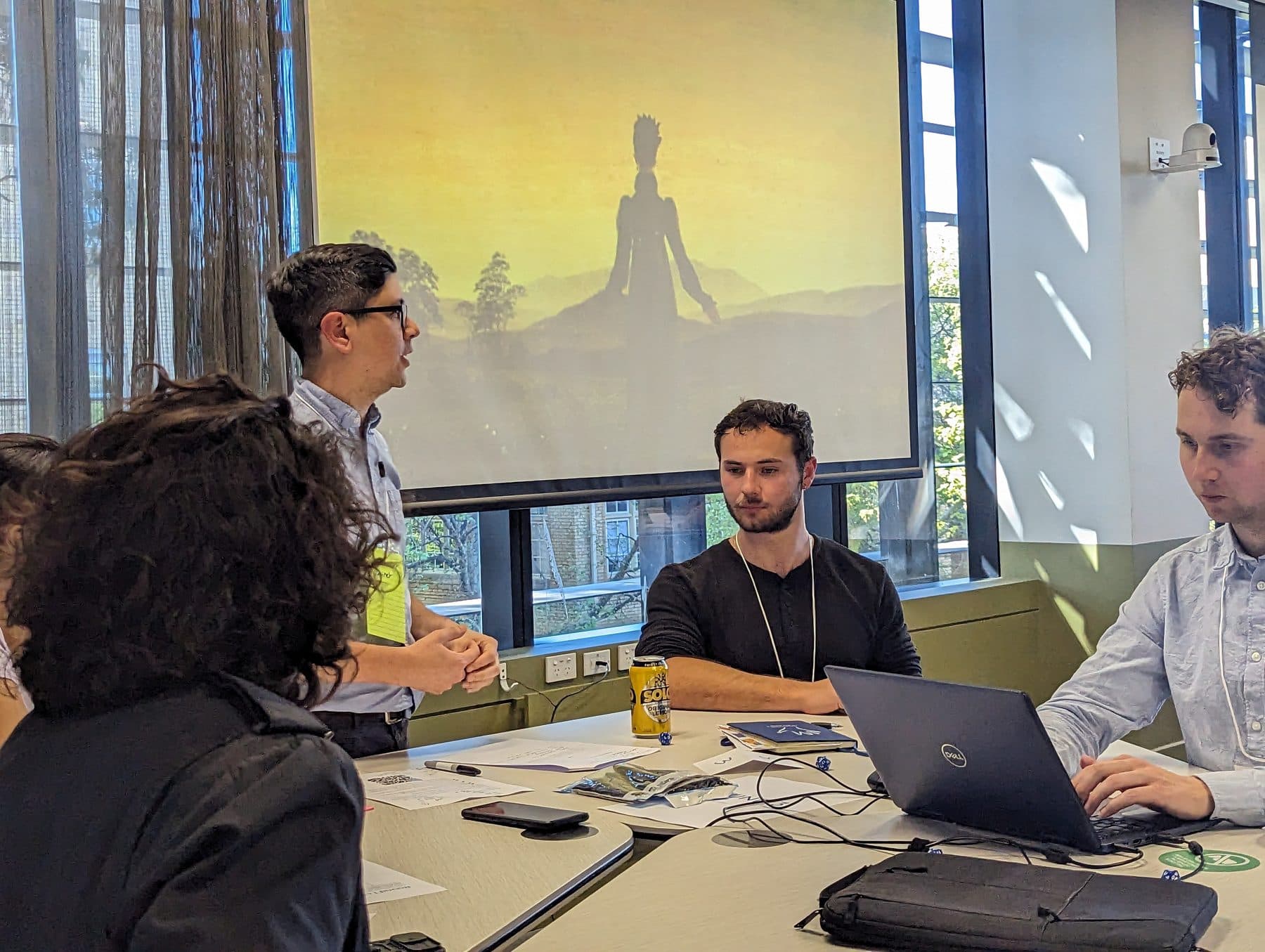
Two facilitator-adjudicated stakeholder wargames for ALLFED - the Alliance to Feed the Earth in Disasters - playing Australia's food system through catastrophe, in front of live audiences at EAGx, the effective altruism community's regional conferences. Real officials played the institution cells.
- 2
- stakeholder games
- 55
- people in the 2023 room
- 9
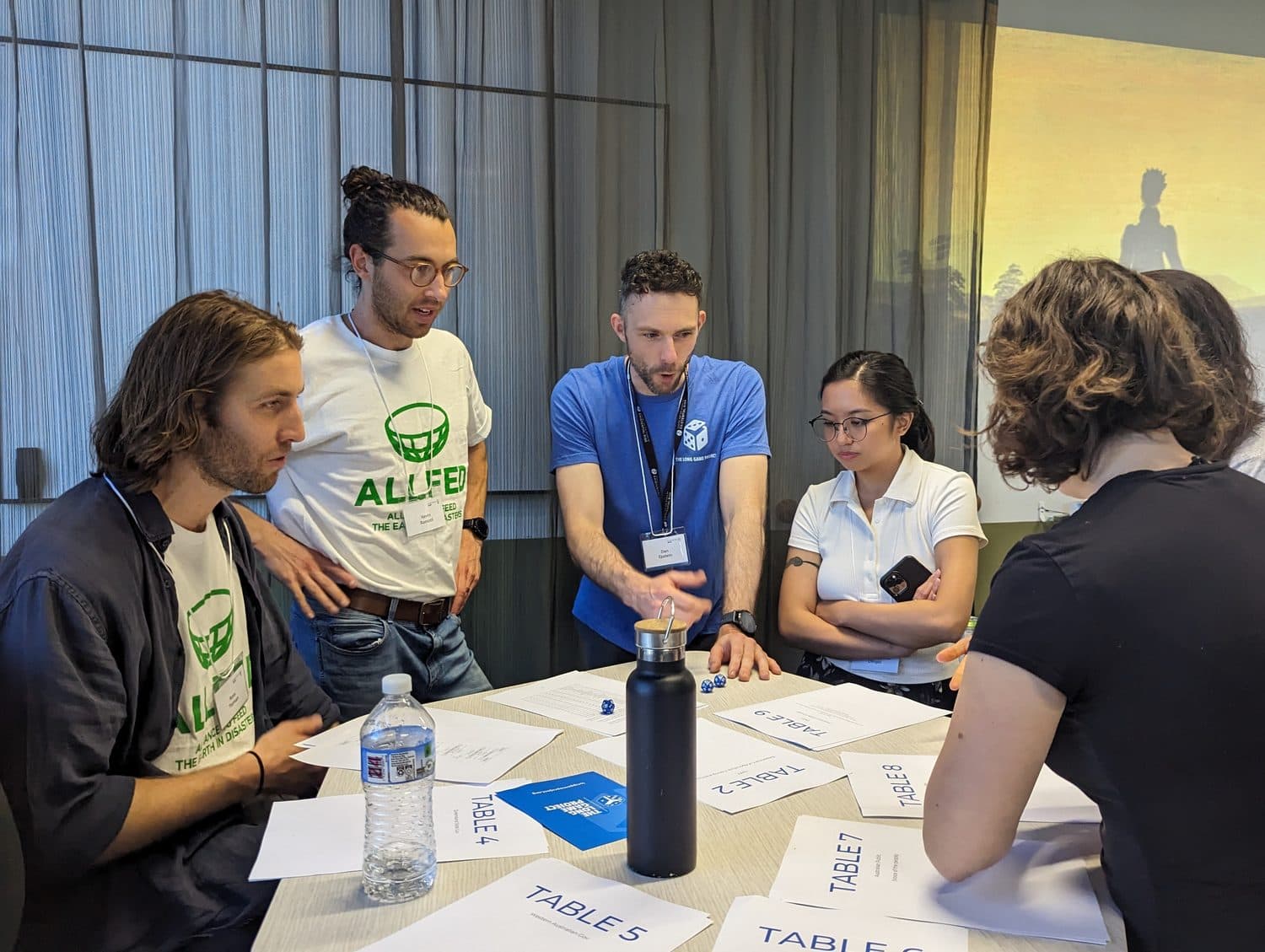
- institutions, one table each
- 2 hrs
- a decade of consequences
The decision at stake
ALLFED researches how food systems survive catastrophic disasters. Emergency plans handle one hazard at a time. No one practises what happens when a single catastrophe reshapes supply, demand and politics all at once, or how a dozen institutions with their own incentives actually behave while it does.
So we put the institutions in the room and made them play it out, with real officials in the institution cells. A collaboration that began in 2023.
Game one · EAGx Melbourne, 2023
Before the Rising Sun
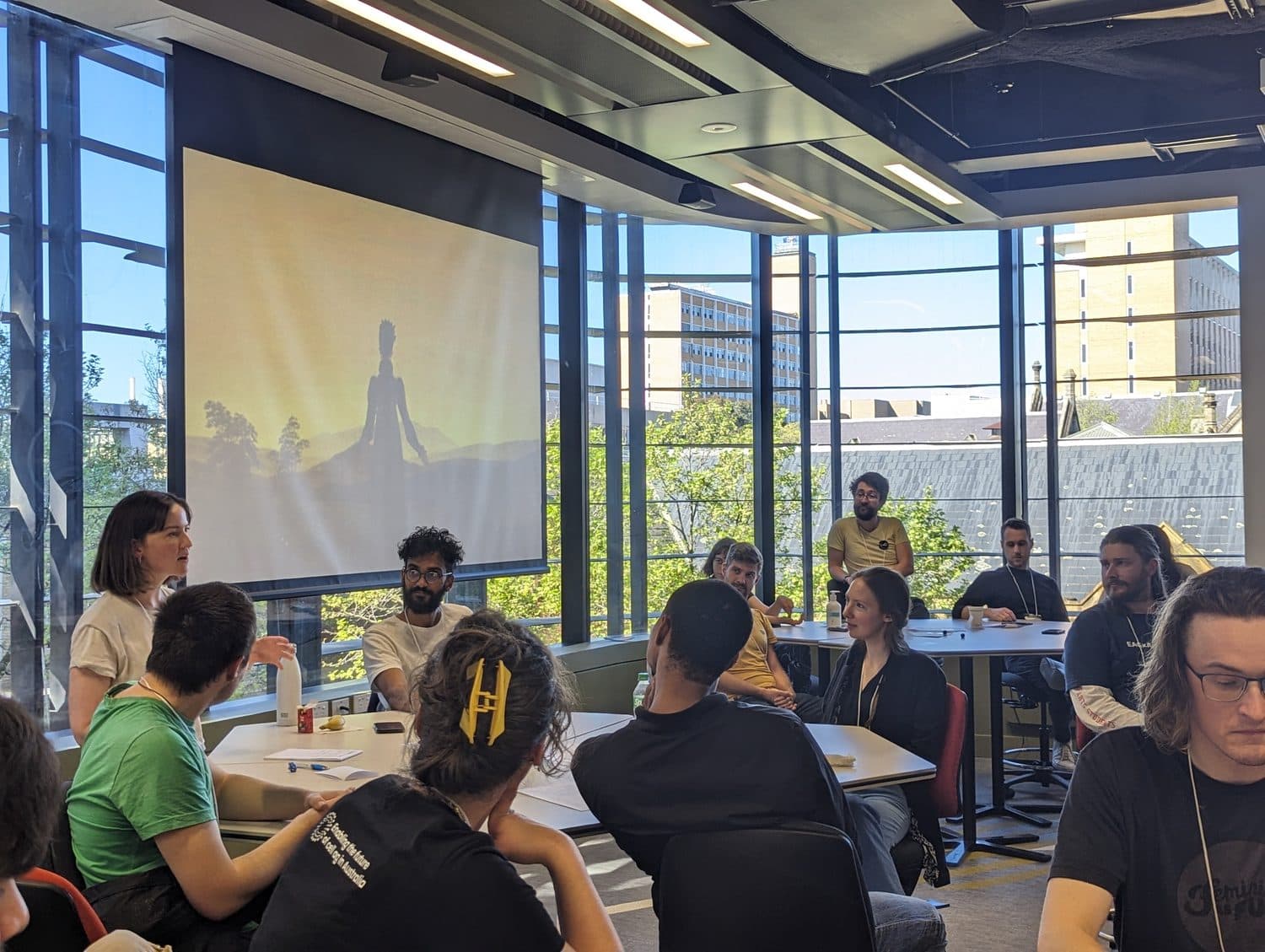
Fifty-five people. Nine institutions. One volcanic winter.
The scenario
Breaking
“Mount Merapi erupts. Airports on high alert as the ash cloud approaches - flight cancellations imminent.”
The ash blocks the sun. Crop yields collapse. What starts as an aviation story becomes a decade-long food crisis with the potential to starve millions. Each of the nine cells gets the same news at the same moment - and has to decide, in public, what its institution does next.
A decade in four rounds
- 01Day zero
Reactions
The eruption breaks as live news. Each cell drafts its first press release in ten minutes, then rolls to see how much it really knows.
- 02Ten days on
Meetings
Public awareness of the coming food shortage is rising. Cells hold fifteen-minute meetings, take one emergency action, or break off to cut their own deals.
- 03Months later
Actions
The world is still dark. Each cell commits to one major and one minor move for the year ahead. Game masters adjudicate the consequences.
- 04A decade out
Epilogues
Every cell writes the future it ended up living in, and reads it to the room. A decade of Australian history, compressed into two hours.
The room
Nine cells, nine sets of incentives, one table each.
Every cell argues its own institution's corner. Nobody is playing to win the room. Each cell plays to protect its mandate, and the mandates pull against each other.
Federal Government
PM and Cabinet: national security, coordination, policy under fire.
NEMA
National Emergency Management: assess the risk, allocate the response.
Australian Defence Force
Logistics, security, and the safety of citizens in high-risk areas.
DAFF
Agriculture, Fisheries and Forestry: biosecurity and the food supply.
Queensland Government
Protect the state's livestock, agriculture and regional economy.
Western Australia
Guard the state's economy and its export lifelines.
Dairy and Meat Industry
The lobby: safeguard the sector, extract government support.
The Supermarket
A big chain: keep essential goods on the shelf and the business alive.
The Australian Public
Follow the guidelines, or don't. Hold the government to account.
Where it went
The futures the cells wrote.
Each cell read its epilogue aloud after playing the decade forward: the coup that almost happens, the lobby that lands a bail-out, the state that threatens to walk.
The Defence Force
Warships redeployed to the northern perimeter. Then the assassination of a supermarket CEO. The epilogue reads like a soft coup gently walked back.
“The ADF is proud to have protected Australian security and maintained public order during this crisis. Over the years, we gradually stand down from visible public security activities.”
The Public
A riot demanding food be seized by the state. Then fragmentation - enclaves forming along ethnic and ideological lines as faith in government drains away.
“Social fragmentation continues, small social enclaves form coalescing along ethnic and ideological lines. The public increasingly loses faith in the government.”
Agriculture (DAFF)
Agriculture is federalised and a multibillion-dollar innovation fund is stood up. It does not end in a ribbon-cutting.
“The Minister for DAFF has resigned. A Royal Commission into the National Agricultural Innovation Fund is underway. The Fund, whilst well intentioned, ultimately failed in impact.”
Western Australia
The state ramps up production, feeds itself and its neighbours, and threatens to walk if the Commonwealth reaches too far into its harvest.
“Ramp up food production and threaten to secede from Australia if they took more than 20% of our food.”
The Dairy and Meat Lobby
Doubled the price of beef, called for a federal buy-back, and negotiated a rescue on its own terms. The epilogue is one line.
“Generous buy back with reparations. We all get Ferraris.”
Queensland
Bet early on alternative protein and seaweed, funded the agencies doing the science, and rode the crisis into a boom.
“Queensland saw an increase in population and productivity, becoming a global leader in food technology.”
From the debrief
The story gives the room something concrete to argue about.
In the post-game debrief, ALLFED described what it saw. Institutions siloed - government talked to government, industry to industry, and the two barely met. As the Defence Force accrued power and public unrest grew, the table drifted toward the beginnings of authoritarianism - a common, uncomfortable starting point. And almost everyone stayed compliant with the official adaptation narrative.
Whether that compliance was real or an artefact of the crowd - the framing talk, the audience, a room built mostly of institutions - is an assumption the game exposed and could not settle.
How the game works
Vague confidence, made to commit.
Before a cell can act on a hunch, it has to price it. Players pick a word for how likely their move is, read off the probability it commits them to, and roll a twenty-sided die against it. Beat the number and the move succeeds - and the game hands back new information. Miss, and the world moves without them. It turns “we think this will work” into a number someone has to own, and lets chance do what chance does in a real crisis.
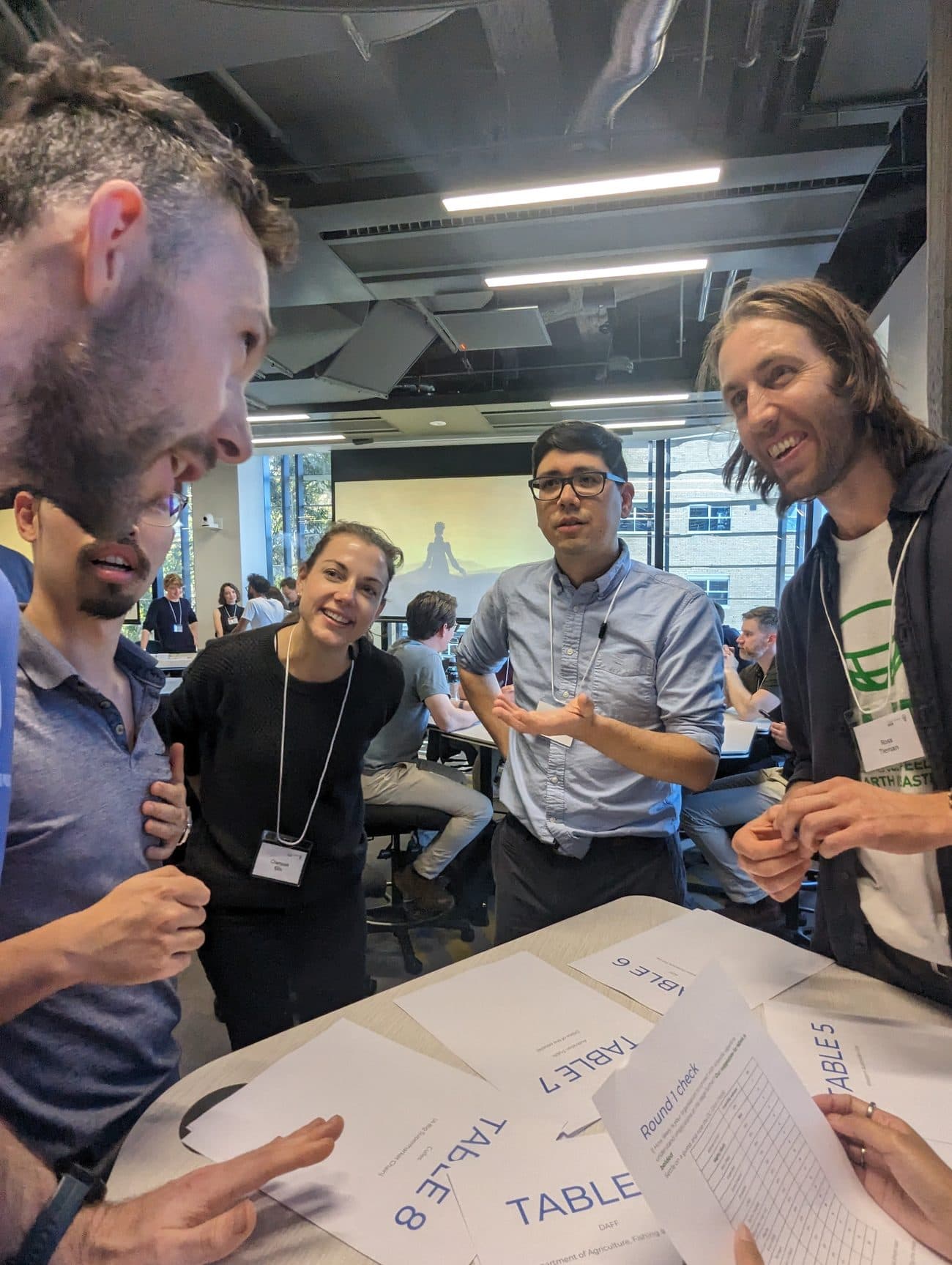
The round check
Pick a word → own the probability → roll a d20 against it.
| Estimate | Odds | Beat |
|---|---|---|
| Almost certain | 99% | 1+ |
| Highly likely | 95% | 2+ |
| Expected | 85% | 4+ |
| Probable | 75% | 6+ |
| Even odds | 50% | 11+ |
| Unlikely | 35% | 14+ |
| Highly unlikely | 10% | 19+ |
A twenty-sided die cannot show 99 per cent, so in play an almost-certain move always succeeded.
Adapted from the words-of-estimative-probability scale used in intelligence analysis.
Game two · EAGx, 2024
The Rust
A year later, a different catastrophe played through the same web of institutions: a rust fungus tearing through Western Australia's wheat. Governments, industry lobbies, supply chains and the public worked the outbreak from the first detection forward. The question behind the design: do the lessons of a slow climate collapse transfer to a fast biosecurity shock, or does each catastrophe break the system its own way?
In-world front page
Rust fungus outbreak devastates WA crops: farmers face unprecedented crisis.
“This is the worst outbreak we've ever seen. Our crops are our life, and seeing them destroyed overnight is heartbreaking.”
Mary Thompson, fourth-generation Wheatbelt farmer (a game character)
Over 90% of the state's wheat, barley, oat and rye is hit. The cells open their role cards to the same in-world front page, and start deciding who moves first.
What the room said
“Having so many relationships to consider and information to integrate felt like a good simulation of the kind of decisions and pressure that governments would be under in a crisis.”
Player, Before the Rising Sun, EAGx Melbourne 2023
- “Seemed surprisingly plausible.”
- “Easy to see how complex dynamics unfold.”
- “Fast paced, enjoyable, high energy. Lots of meaningful learnings.”
- “Well thought through, well organised, moderated with pragmatism and good humour.”
- “Extremely engaging gameplay.”
- “The whole thing. Absolutely brilliant.”
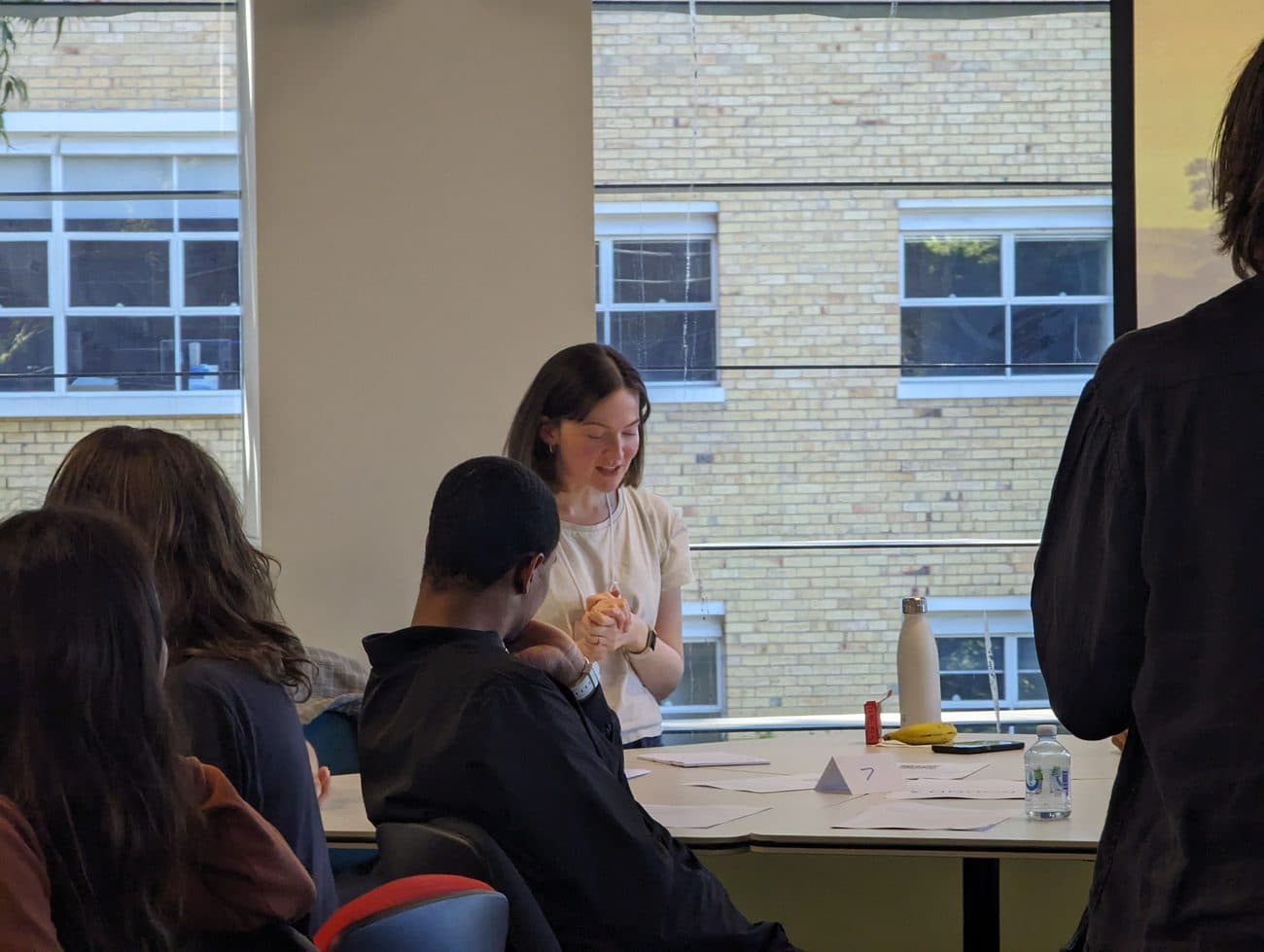
Both games were designed, facilitated and adjudicated by The Long Game Project and delivered at EAGx conferences, with real officials in the institution cells. Every quote here is participant feedback or a cell's own epilogue, taken from our post-game reports, except the in-world front page, which is game material. The post-game reports are not published here. We publish what an exercise is built to do - surface assumptions and pressure-test them together - and report outcomes only once they exist.
Facing a decision with this shape?
Tell us what you want to test in four quick questions. We reply within two working days with a format and a price.